Secure Crypto Wallet Access via Ledger® Live
Secure crypto wallet access via Ledger® Live (now branded as Ledger Wallet™) refers to managing digital assets through a companion app while keeping private keys isolated inside a Ledger hardware wallet. This setup lets users interact with crypto markets, DeFi, and NFTs without exposing their keys to online threats.
What Ledger® Live Does
Ledger® Live acts as a control center for a Ledger hardware wallet, giving users a single interface to view and manage multiple cryptocurrencies. The app connects to blockchain networks, displays balances, and prepares transactions while leaving signing to the hardware device.
- The app supports portfolio tracking, real‑time balance updates, and market insights across thousands of coins and tokens.
- Users can send, receive, stake, and swap assets, or interact with Web3 and DeFi services, all routed through the secure hardware wallet flow.
One of the standout features is its comprehensive portfolio management. From a single dashboard, you can track thousands of cryptocurrencies across multiple blockchains, including Bitcoin, Ethereum, Solana, and more – supporting over 15,000 assets. The app provides real-time balances, historical performance charts, and portfolio allocation insights, making it easy to monitor your investments.
Beyond viewing, Ledger Live enables direct actions within the app. You can securely buy crypto using integrated providers like MoonPay or Changelly, with funds sent straight to your hardware wallet. Swapping assets is equally straightforward, including cross-chain swaps via partners like THORChain for non-custodial exchanges. Staking is supported for proof-of-stake networks, allowing you to earn rewards while keeping assets self-custodied. For NFT enthusiasts, the app includes dedicated management tools to view, send, and interact with collections safely.
Security is woven into every aspect. Private keys never leave the hardware device – even during transactions. The app features "Transaction Check," acting like antivirus for your operations by verifying details before signing. Ledger Sync, a newer addition, allows seamless synchronization of accounts across desktop and mobile devices using encrypted protocols, ensuring consistency without exposing sensitive data. For added convenience, the mobile version supports Bluetooth connectivity with devices like Nano X, while desktop offers wired reliability.
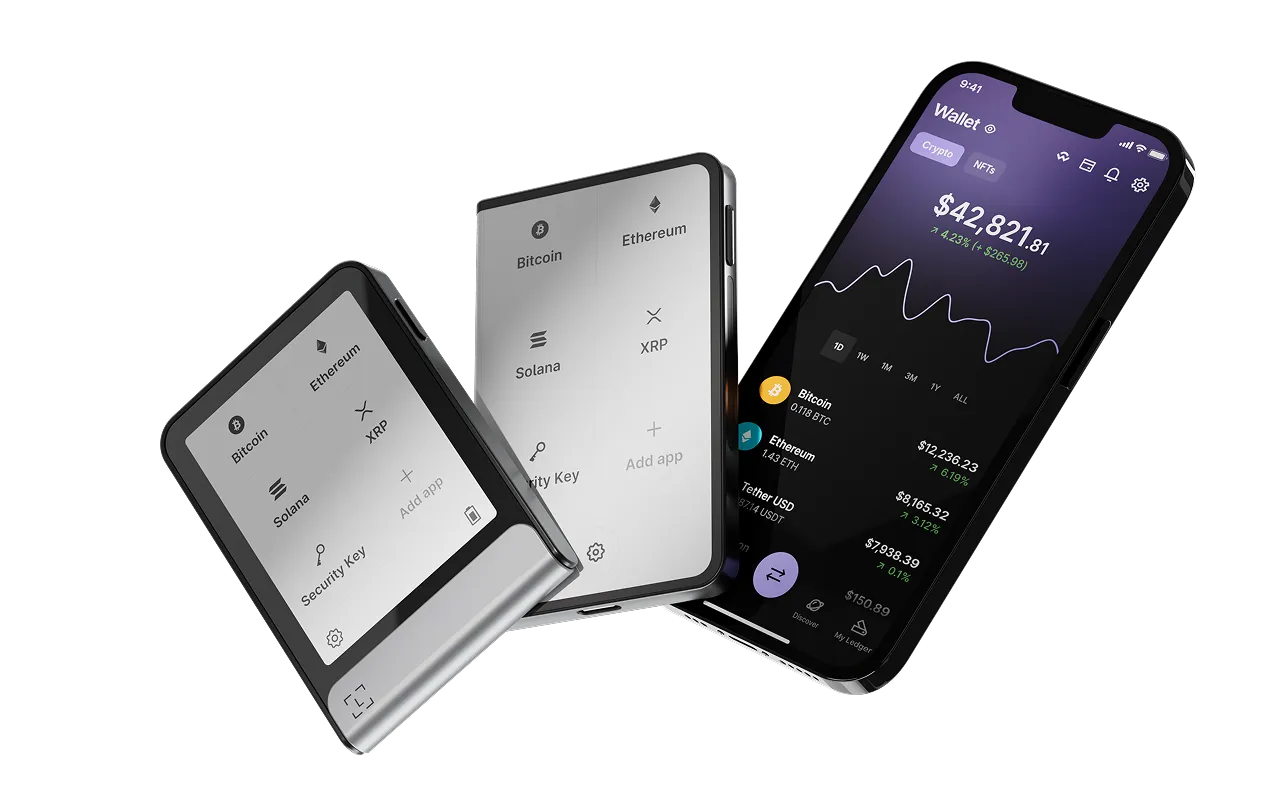

The "Discover" section transforms Ledger Live into a Web3 portal, connecting to decentralized apps (dApps) for DeFi, gaming, and more. Interactions remain secure: dApps request signatures, but approval happens offline on your device.
How Secure Access Works
Security in this context is built on the separation between public and private keys, and the way transactions are signed. The hardware wallet keeps private keys offline in a secure element chip, while Ledger® Live only handles public information and unsigned transactions.
- Private keys never leave the Ledger device; it signs transactions internally and returns only the signed payload for broadcasting, even if the connected computer is compromised.
- Ledger® Live stores or derives public keys to monitor balances and generate receiving addresses, effectively operating as a watch‑only interface until the device approves any outgoing transaction.
Setup and Access Flow
Secure access starts with proper initialization of both the hardware device and the Ledger® Live application. Each step is designed to ensure that only the legitimate owner can control the wallet and recover it if needed.
- During setup, users create a PIN on the hardware wallet and write down a 24‑word recovery phrase that can restore the wallet on another device if the original is lost.
- After installing Ledger® Live from official sources, users pair the app with the device, add accounts for selected blockchains, and can then access portfolios, send funds, or connect to supported third‑party services via the app interface.
Key Security Features
The combination of hardware isolation, app permissions, and user verification provides multiple layers of protection. This layered model helps defend against malware, phishing, and unauthorized physical access.
- A secure element chip on the device protects private keys against physical tampering, while on‑screen transaction details let users verify amounts and addresses before confirming.
- Optional app‑level protections, such as password locks and strict verification prompts, reduce the risk of someone using an unlocked computer to access Ledger® Live and attempt unauthorized actions.
Best Practices for Safe Use
To maintain secure crypto wallet access, users must combine the platform’s technical safeguards with strong operational habits. Human error and social engineering remain the main vectors for asset loss.
- The recovery phrase must never be typed into any website, shared with anyone, or stored digitally; only the official device and app from trusted download sources should be used.
- Users should treat unsolicited emails, phone calls, or pop‑ups referencing Ledger® Live as potential phishing attempts, avoiding any prompts to “reverify” recovery phrases or install unofficial client updates.